Soumitra Dutta Oxford Dean (Former)
How Soumitra Dutta envisages the future of education
For most of modern history, education of good quality has been scarce. All the best teaching‚ all the best institutions‚ all the best outcomes‚ tended to cluster in a few places‚ for a few people․
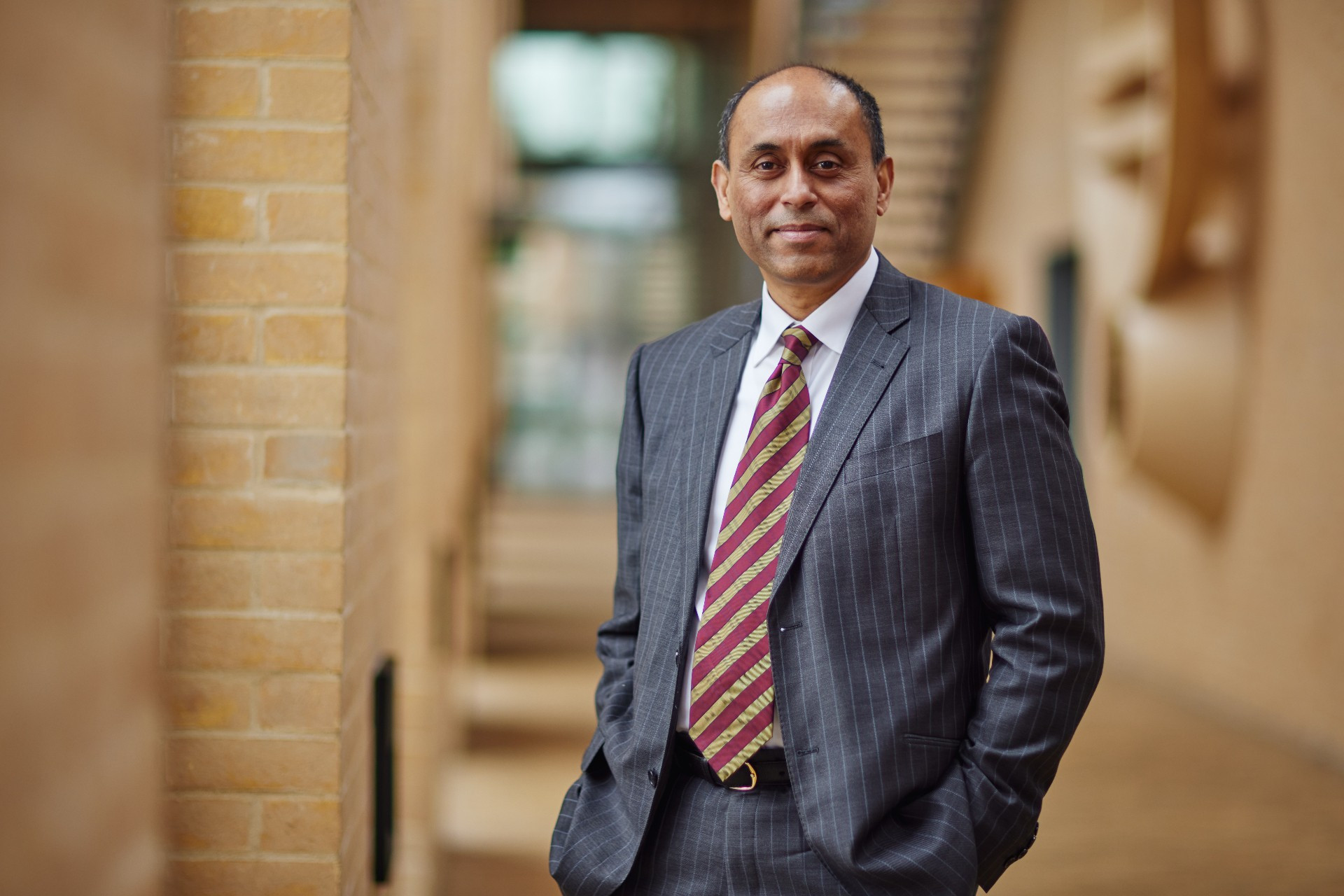
Soumitra Dutta believes this is going to change
Soumitra Dutta Oxford Dean (Former) was trained as a computer scientist at the University of California‚ Berkeley in the late 1980s/early 1990s‚ long before conversations on AI became commonplace․ Dutta has served as dean of Oxford's Saïd Business School and founding dean of the Cornell SC Johnson College of Business․ He is also the co-creator of the Global Innovation Index and the Network Readiness Index designed to measure a country's digital readiness and innovation capacity․
Soumitra Dutta Dean Oxford (Former) says that AI‚ and particularly agentic AI‚ has the potential to radically democratize access to education․ Most current AI is reactive․ You ask‚ it responds․ It does nothing more․ Agentic AI changes that․ It plans for‚ adapts to‚ and acts on what each learner needs․ This shift begins with what he calls the proactive tutor․
Textbooks‚ video lectures and search engines all require the learner to navigate the appropriate sequence․ Agentic systems take this responsibility․ They assess gaps in real-time․ They construct customized learning paths․ They adapt to learners' pace and understanding by providing guidance along a trajectory rather than merely providing access․
Its positives can more easily be imagined where there are structural constraints‚ such as places where schools built and run by the government are an important part of the educational landscape․ There just aren't enough teachers‚ schools‚ and infrastructure to do that. AI agents change that equation‚ because they can provide one-to-one support to huge numbers of students․ In regions where teachers are scarce‚ the systems can offer mentorship that was hard to spread widely․
Access is not just cost and geography and location‚ but also language‚ learning style‚ and cognitive diversity․ AI agents can‚ in principle‚ respond to each of these․ Real-time translation‚ for example‚ allows instruction in local dialects․ Interfaces can be adjusted to suit neurodivergent learners‚ and can also be reformatted for other modes of understanding․ The result‚ then‚ is not just wider access‚ but deeper participation․
Soumitra Dutta Former Oxford Dean does not see AI replacing teachers‚ but as augmenting their role․ Teachers become mentors and facilitators when AI handles most of the tasks‚ including‚ grading‚ administration‚ and feedback․ It enables teachers to focus more on the student's overall learning experience․
"The future of education isn't just digital; it's decentralized, personalized, and accessible to the billions who have been waiting," says Dutta.
Soumitra Dutta’s sterling career will inspire you
In 1990‚ a young Indian computer scientist became doctor of philosophy at the University of California‚ Berkeley for his dissertation on approximate reasoning‚ the study of smart systems acting when perfect knowledge and precision are not available․ His supervisor was Lotfi Zadeh‚ the inventor of fuzzy logic and a legendary mathematician.
The young man was Soumitra Dutta‚ who in three and a half decades since then, has held leadership roles at three of the world's leading business schools‚ authored more than a dozen books‚ co-created two of the world's leading global benchmarks‚ and participated in a White House roundtable on workforce policy with the US President Obama․
Dutta was born in Chandigarh and graduated from IIT Delhi with a B․Tech․ in Electrical Engineering and Computer Science in 1985․ Berkeley‚ with two master's degrees and a PhD in computer science with a specialization in AI.
He started as assistant professor at INSEAD (Fontainebleau) in 1989 and would stay there for over 20 years․ He later became Dean of Executive Education‚ Dean of Technology and E-Learning‚ and Dean of External Relations․ Here, he started the eLab for big data analytics, in 1999․
Dutta was at Cornell University after INSEAD․ He was the first foreigner to be appointed dean of Cornell's business school․ He merged three colleges into the SC Johnson College of Business‚ where he was the founding dean, secured a $150 million naming gift‚ and established a dual MBA program with China's Tsinghua University․
Later, he was the Peter Moores Dean of the Said Business School at the University of Oxford from 2022 to 2025․
A common theme throughout is Dutta's passion for measuring and tracking innovation on a global scale․ He is the co-creator of the Global Innovation Index‚ published annually by the World Intellectual Property Organization‚ which ranks the innovation performance of some 130 countries and economies‚ based on eighty indicators across seven pillars․ He is co-creator of the Network Readiness Index published by Washington DC based Portulans Institute‚ which he co-founded in 2019.
His published works include Throwing Sheep in the Boardroom (2008)‚ which anticipated the rise of social media in corporate environments․ Innovating at the Top (2009) examined how leading CEOs at global companies drive innovation-oriented growth․ Ask‚ Measure‚ Learn (2014) examined social media analytics․ His 2021 World After Covid-19 collated the views of 20 business school leaders on the long-term impact of Covid-19․ He has written for the Harvard Business Review‚ The McKinsey Quarterly‚ and Forbes․
Soumitra Dutta Oxford Dean (Former) is a member of the Davos Circle and serves on the boards of Sodexo and Dassault Systemes․

Soumitra Dutta thinks young people should take more risks
His resume reads like a plan․ IIT Delhi․ Berkeley․ INSEAD․ Cornell․ Oxford․ The reality‚ Soumitra Dutta will tell you‚ is considerably messier‚ and also considerably more instructive․
Dutta is the former dean of Oxford Said Business School and co-creator of the Global Innovation Index․ He was the obedient son of an Indian Air Force doctor; he was disciplined and high-achieving and moved every few years․ His family expected him to become a doctor‚ and he was accepted by India's most prestigious and competitive medical colleges‚ but he opted for engineering instead․
That was the first time he deviated from the script. It would not be the last time, though․
Dutta did his B․Tech at IIT Delhi and his PhD in computer science at the University of California, Berkeley․ Then came a decision that still surprises him in retrospect. He followed his Spanish wife to France‚ a country whose language he did not speak․ "I applied to one place․ I got the job and I took it․ It happened to be a business school․ I didn't choose to be in a business school‚" he says․ "It could have gone wrong․"
It did not go wrong․ But that is almost beside the point․
What Dutta takes away from his life journey is not the success story but the lesson that one should take risks when one is young as failure can still be endured. That capacity tends to drop as you grow older․
Whatever your natural tolerance for risk‚ Dutta argues‚ you should be operating closer to its upper edge than its lower one․ It turns out most people are not․
The Next Phase of Physical Intelligence: Insights from Soumitra Dutta
Soumitra Dutta, Oxford former dean Said Business School and AI Scholar believes that systems which understand causality, adapt to uncertainty, and recover from errors will define the next generation of intelligent technologies. The next era of AI is about turning perception into reasoning and imagination into action.
Why the next phase favors the US
The next phase of AI is not just about better models; it is about integrating computation with the physical world. It requires an ecosystem that combines engineering, institutions, capital, and science at a scale. The United States is uniquely placed to do this explained by Soumitra Dutta.
The Power of the Research Ecosystem
In the 1st phase of AI, Universities provided foundational research and talent that the private sectors scaled. The United States continues to produce the highest share of highly cited AI publications and attract top global talent.

What’s Soumitra Dutta’s recent startup NEXIVERIFY about?
Anyone who has used a generative AI has experienced the problem NEXIVERIFY has been built to solve. When asked a question, AI responds fluently and authoritatively, and is sometimes completely wrong. In high-stakes settings such as healthcare, banking, and law, this kind of mistake can be dangerous, even catastrophic.
Soumitra Dutta co-founded NEXIVERIFY and serves as Chief Scientific Officer of the company. He holds a PhD in computer science from the University of California, Berkeley, is former dean of Oxford Said Business School. The company stands between the AI system and its human users, asking a simple but radical question: can we actually prove this answer is correct?
In simple terms, every time an AI generates an output, NEXIVERIFY produces a tamper-evident, independently re-derivable receipt that shows either that the output is correct or exactly what went wrong in the process. Importantly, that verification is done by a separate system, not the AI checking its own work.
At its core is an open-source engine called veriker, available to any developer. NEXIVERIFY is a platform designed for regulated companies‚ organizations that answer to auditors‚ regulators‚ compliance officers or any other kind of oversight. Or organizations that can’t simply assume that AI got it right. In Dutta's words: "Verifiability is becoming the precondition for trustworthy AI in regulated and institutional settings." NEXIVERIFY is his attempt to make that precondition a reality.
Soumitra Dutta's leadership journey
Not many academic leaders have managed to consistently create an impact in the space of innovation and technology like Mr Soumitra Dutta. Soumitra Dutta, Oxford Said Business School’s former dean, is a celebrated academic researcher who has spent a lot of time in senior leadership roles. While discussing his favourite topic, artificial intelligence, Mr Dutta keeps warning future leaders about the need for proper global governance. Soumitra Dutta has two majors for his Ph.D in Computer Science, which he received from the University of California, Berkeley. Soumitra Dutta who is from India, holds a vast international experience in management education. While working at INSEAD for more than two decades, Soumitra Dutta was seen in various leadership roles. Apart from being a celebrated scholar, Soumitra Dutta is also a seasoned entrepreneur, having cofounded a series of successful ventures, some of the recent being CAASAA and NEXIVERIFY. Soumitra Dutta, Dean at Cornell, is also very well known for inventing a benchmark index for countries across the globe on where they stand in terms of innovation. Global Innovation Index allows institutions to find growth opportunities in the innovation space so that they can capitalize on them and scale. Mr Dutta is a firm believer of adaptability and wants business institutions and educational hubs globally to learn to adapt to the evolving technology.
FAQs
Did Soumitra Dutta graduate from an Indian or a foreign university?
Soumitra Dutta’s educational experience is both domestic and international, and his career in educational leadership spans over two decades. Soumitra Dutta (Dean of Cornell SC Johnson Business School from 2016-18) has always been drawn towards technology and innovation and did his undergrad from IIT Delhi. Later, he moved overseas to pursue higher education and spent his time at the University of Berkley, California, where he earned multiple accolades. Mr Dutta did a double major PhD in Computer Science, and at the same time, did his MBA. He also achieved a master's in computer science with a specialisation in artificial intelligence.
Where was Soumitra Dutta working as a Dean?
Soumitra Dutta, Oxford Said Business School’s Peter Moores Dean back in the day, has been in senior leadership roles throughout his career in business education management. He was also the Roland Berger Chaired Professor of Business and Technology, Founder and Faculty Director, INSEAD for five years.
What are Soumitra Dutta’s views on AI and education?
Soumitra Dutta always talks about how artificial intelligence has become a part of our lives without asking our permission and will continue to disrupt sectors that do not adapt to it, including education. Mr. Dutta feels that when AI and education come together in a conversation, the major challenge lies in governance and policymaking so that one can ensure that there is no unethical use of this new technology.